
 English
 Français
 Español
 日本語
 繁体中文
 简体中文


eCall Self-Test and Warning Indication: How Should Critical Faults Be Detected?
Olivia | Blue Asia
Email: [email protected]
WhatsApp: +86 176 6360 6879
An emergency call system is designed to support vehicle occupants when an accident occurs. But what happens if part of the eCall system is already malfunctioning before an emergency takes place?
For automotive OEMs, Tier 1 suppliers, and eCall system manufacturers, detecting system faults and communicating them to the driver are important aspects of functional compliance.
Under the EU's eCall technical requirements, system self-testing and failure warning functions are specifically addressed in Commission Delegated Regulation (EU) 2017/79, Annex VII.
Let's look at what manufacturers need to understand.
1. What Does the EU Regulation Require?
Commission Delegated Regulation (EU) 2017/79 establishes detailed technical requirements and test procedures for 112-based eCall in-vehicle systems, separate technical units (STUs), and relevant components.
Annex VII specifically addresses the in-vehicle system self-test.
The key requirements include:
Self-test at system power-up
The eCall system shall carry out a self-test each time the system is powered up.
Monitoring of critical technical items
The self-test function shall monitor at least the technical items listed in Annex VII.
Failure warning indication
If the self-test detects a failure, the system shall provide either:
A visual tell-tale; or
A warning message in a common display area.
Warning persistence
The warning must remain active while the failure is present.
It may be temporarily cancelled, but it must be displayed again whenever the ignition or vehicle master control switch is activated.
These requirements establish a clear relationship between fault detection, warning indication, and system status.
2. Which Technical Items Should Be Monitored?
Annex VII identifies a number of technical items that the self-test function must monitor.
These include:
eCall ECU operating condition, including internal hardware, processor, memory, and logic functions.
Connection status of the mobile network antenna.
Operating condition of the mobile network communication device.
Connection status of the GNSS antenna.
Operating condition of the GNSS receiver.
Connection status of the crash control unit.
Communication failures between relevant components.
SIM presence, where a removable SIM is used.
Connection of the power source.
Sufficient power-source charge.
The specific monitoring principle applied to each item must be documented by the manufacturer.
This is particularly important because the regulation requires more than simply stating that a self-test function exists. Manufacturers must also explain how the relevant technical conditions are monitored.
3. How Is the Self-Test Function Verified?
Annex VII also specifies a self-test verification procedure.
The general verification process includes:
Step 1: Introduce a simulated malfunction
A critical failure monitored by the self-test function is introduced for each listed item.
The manufacturer must provide a list of checks and explain how the relevant failure conditions can be triggered.
Step 2: Power up the eCall system
The system is powered up, for example, by switching on the ignition or activating the vehicle master control switch.
The tester then verifies that the malfunction indicator illuminates shortly afterwards.
Step 3: Restore normal operation
The system is powered down and the malfunction is removed to restore normal operation.
Step 4: Verify the warning behavior again
The system is powered up again.
The tester verifies that the malfunction indicator does not illuminate or extinguishes shortly after its initial illumination.
For failures that cannot be simulated or injected by the technical service, the manufacturer must provide documentation describing the test procedure and results.
This makes the availability of technical documentation an important part of test preparation.
4. What Should Manufacturers Pay Attention To?
For OEMs and Tier 1 suppliers, several practical issues deserve attention during development and validation.
A. Monitoring Coverage
Check whether every applicable technical item listed in Annex VII is covered by the self-test function.
B. Fault Simulation
Confirm that the manufacturer can explain how each monitored failure condition can be triggered or otherwise verified.
C. Warning Indication
Verify that the required visual tell-tale or common-area warning message is correctly activated when a failure is detected.
D. Warning Persistence
Check whether the warning remains active while the failure is present and reappears following the next ignition or master-control activation if temporarily cancelled.
E. Technical Documentation
Prepare the monitoring principles, fault simulation instructions, and relevant test records for the technical service and type-approval authority.
These checks can help identify documentation and verification gaps before formal assessment.
5. What Has Not Automatically Changed?
The self-test requirements should be interpreted within the scope of Annex VII.
They do not mean that every possible malfunction must be detected through an identical monitoring mechanism.
The regulation identifies minimum technical monitoring items and requires manufacturers to document the technical principles used for monitoring them.
Similarly, temporarily cancelling a warning does not mean that the underlying failure has been resolved.
Manufacturers should distinguish between warning acknowledgement, fault clearance, and restoration of normal system operation.
6. A Practical Preparation Checklist
Before submitting an eCall system for assessment, development teams can review the following:
Confirm the applicable eCall system and approval scope.
Review all monitoring items listed in Annex VII.
Document the monitoring principle for each item.
Prepare fault simulation and verification procedures.
Check warning activation and persistence.
Verify warning behavior after fault clearance.
Prepare technical documentation and test records.
Identify any failure conditions that cannot be directly simulated and prepare the required supporting documentation.
Closing Thoughts
eCall compliance is not only about whether an emergency call can be initiated. The system must also be capable of identifying specified failures and informing the driver when its operation is affected.
For automotive manufacturers and suppliers, integrating self-test verification into the development and validation process can help make project preparation more structured.
At Blue Asia, we work in electronic testing, certification, and global market access. If your automotive project involves eCall, EMC, or other electronic compliance requirements, feel free to contact us to discuss your project scope and potential support.
Olivia | Blue Asia
Email: [email protected]
WhatsApp: +86 176 6360 6879
 المدونة
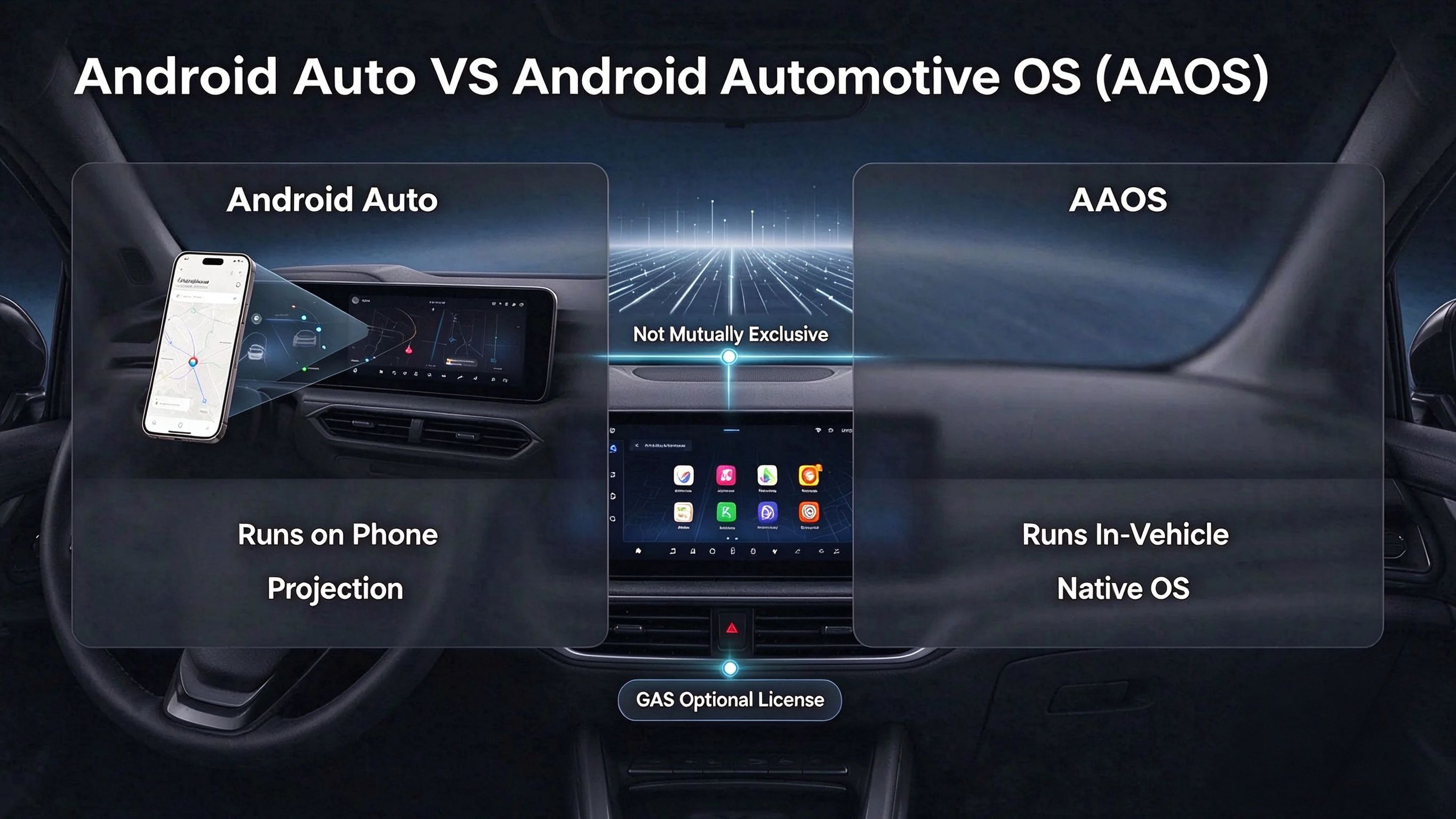
Distinguishing Android Auto from Android Automotive OS at Project Start
اقرأ المقال
 المدونة
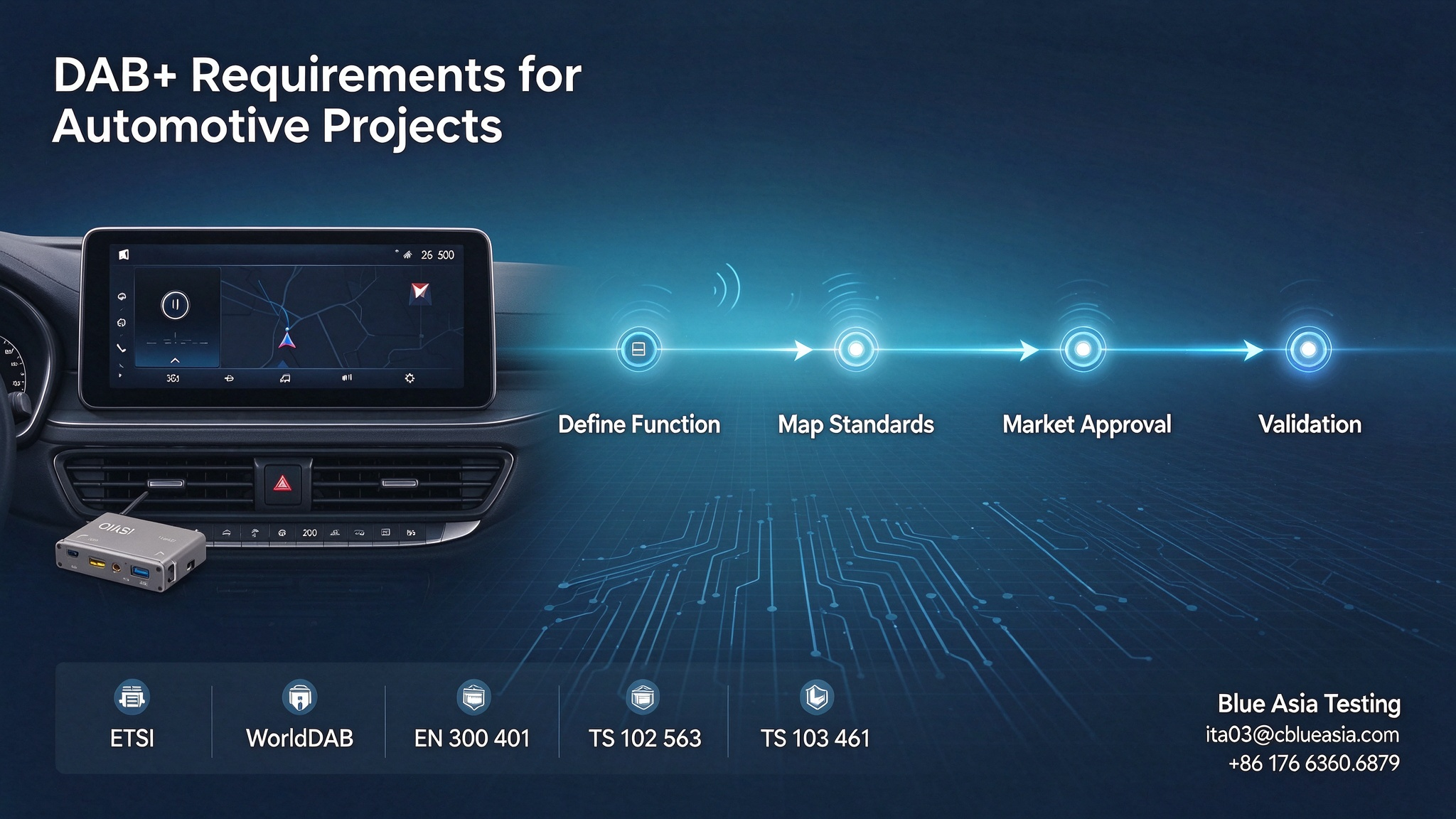
Defining DAB+ Requirements Before Starting an Automotive Project
اقرأ المقال
 المدونة
Why Vehicle Type Approval Starts Before The First Prototype Exists
اقرأ المقال
 المدونة
Why Automotive Certification Is Becoming a Software Project
اقرأ المقال
 المدونة
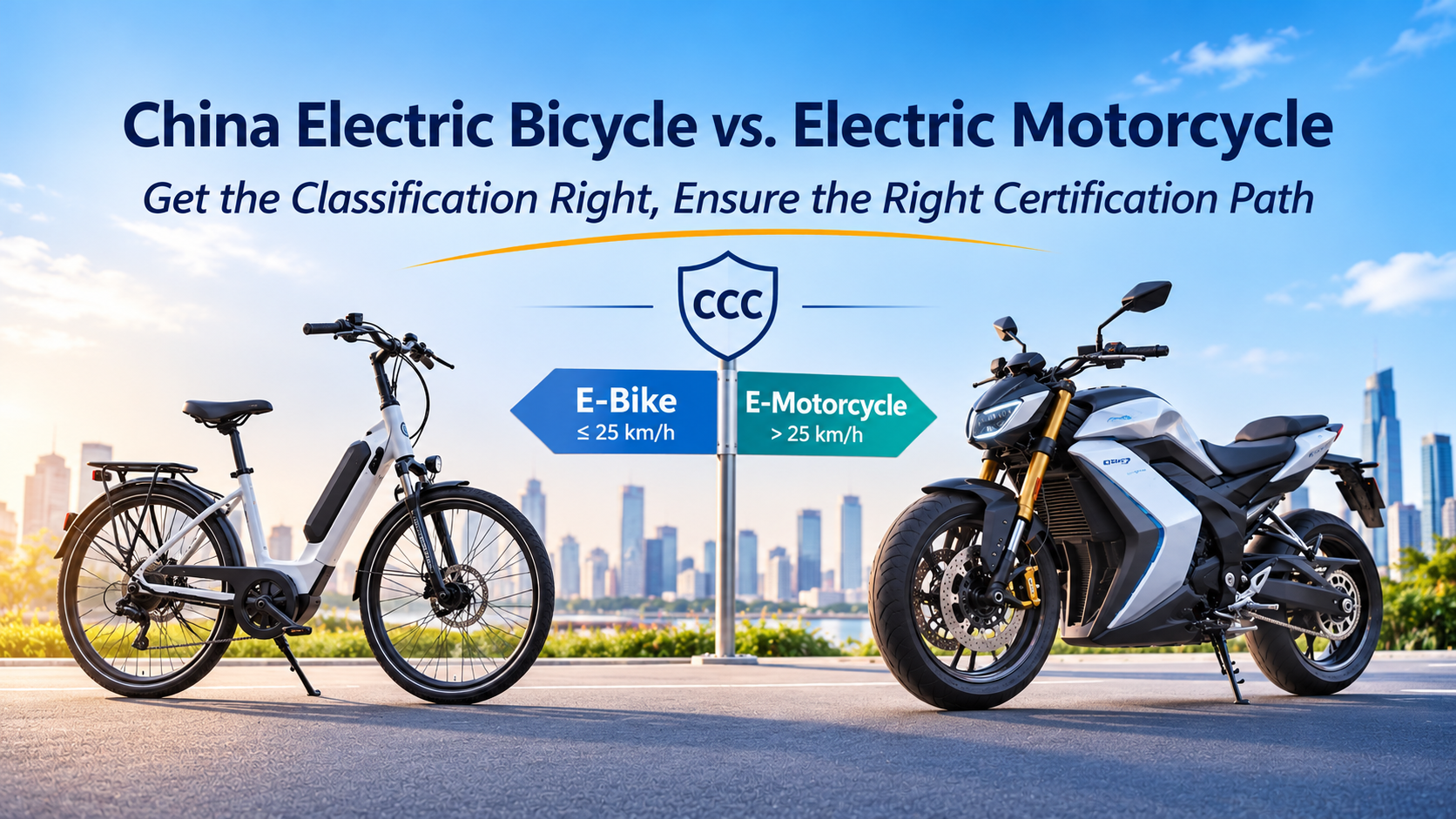
China Electric Motorcycle vs. E-Bike: Why Vehicle Classification Determines the Entire Certi
اقرأ المقال
 المدونة
Your Vehicle Passed Type Approval. Can an OTA Update Make It Non-Compliant?
اقرأ المقال

 4000259520