
 English
 Français
 Español
 日本語
 繁体中文
 简体中文


GCC eCall Compliance – Automotive Requirements Across the Middle East
eCall Across the GCC: Why One Test Report May Not Be Enough for Every Market
For automotive manufacturers planning to enter the Middle East, the Gulf Cooperation Council (GCC) is often approached as a single regional market.
From a commercial perspective, this makes sense. From a vehicle compliance perspective, however, the situation is more complicated.
eCall is a good example.
Although GCC countries are moving towards greater regulatory alignment, national requirements, implementation dates and approval procedures may still differ.
The Regulatory Landscape Is Changing
Several recent developments show why manufacturers need to follow the market closely.
In the UAE, UAE.S 5019:2024 is already a mandatory technical regulation for vehicle eCall systems.
In Saudi Arabia, SASO 2944:2023 is scheduled for mandatory application from January 1, 2028, following the 2026 postponement.
At the regional level, seven GCC countries notified a proposed technical regulation for vehicle eCall in June 2026.
These developments point towards greater harmonisation, but they do not mean that all national approval procedures are already identical.
The Technical Challenges Go Beyond Certification
An eCall system may use similar hardware across different vehicle markets, but its actual operation depends on several factors.
1. Mobile Network Compatibility
The communication module must support the relevant cellular technologies and network configurations in the target market.
2. Emergency Call Routing
Manufacturers need to understand how the emergency call is routed and which receiving endpoint is expected under the applicable service arrangement.
3. Positioning and Data Transmission
The system should provide accurate vehicle location information and transmit the required emergency data according to the applicable technical specification.
4. Manual and Automatic Activation
Both activation scenarios should be considered during system validation, including trigger conditions and fault handling.
5. Vehicle Integration
The eCall function must work reliably with the vehicle's power supply, communication network and electronic control architecture.
Why a Single Test Report May Not Cover Everything
A test report demonstrates performance against a defined test scope, configuration and standard.
It does not automatically prove compliance with every national requirement.
For example, a report prepared for one market may not address another market's specific communication configuration, documentation requirements or approval procedure.
This is particularly important when the same vehicle platform is supplied to several GCC countries.
A More Practical Approach for OEMs
Before launching a vehicle in the region, manufacturers should:
Identify the exact destination countries.
Confirm the applicable eCall standards and their implementation dates.
Review the vehicle's TCU and cellular module configuration.
Prepare a market-specific validation plan.
Check whether existing reports can be reused or require supplementary testing.
Compliance Planning Should Start Early
Regional expansion is easier when compliance is considered during vehicle development rather than after production has started.
At Blue Asia Labs, we support automotive manufacturers and suppliers with vehicle electronics testing, RF and EMC evaluation, and technical compliance assessments.
For companies targeting the GCC market, a clear understanding of both regional developments and national requirements is an important step towards a smoother vehicle launch.
 المدونة
Why Two-Wheelers Are Becoming As Complex As Passenger Cars
اقرأ المقال
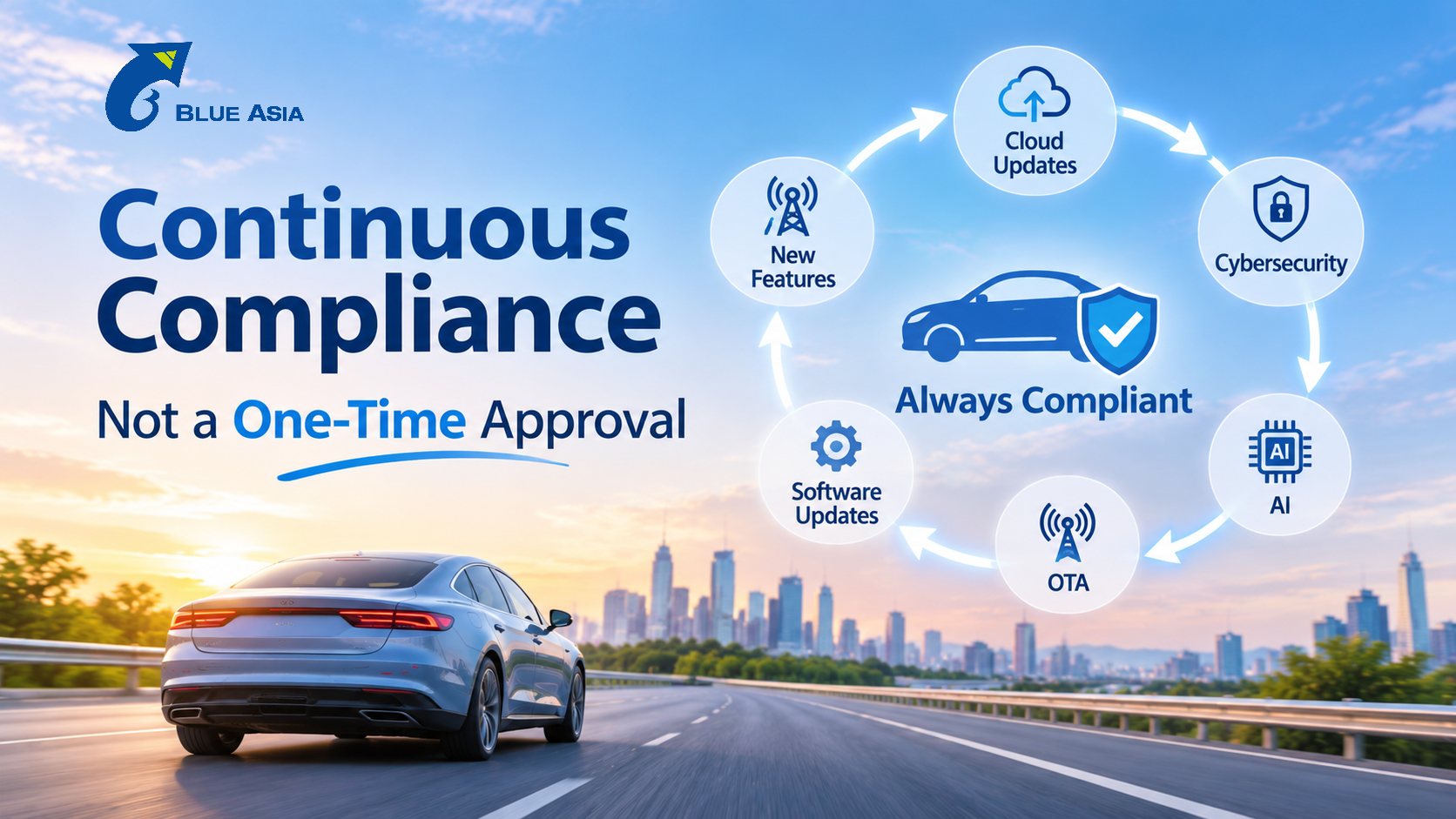 المدونة
Why Future Vehicle Certification Will Be Continuous Instead of One-Time Approval
اقرأ المقال
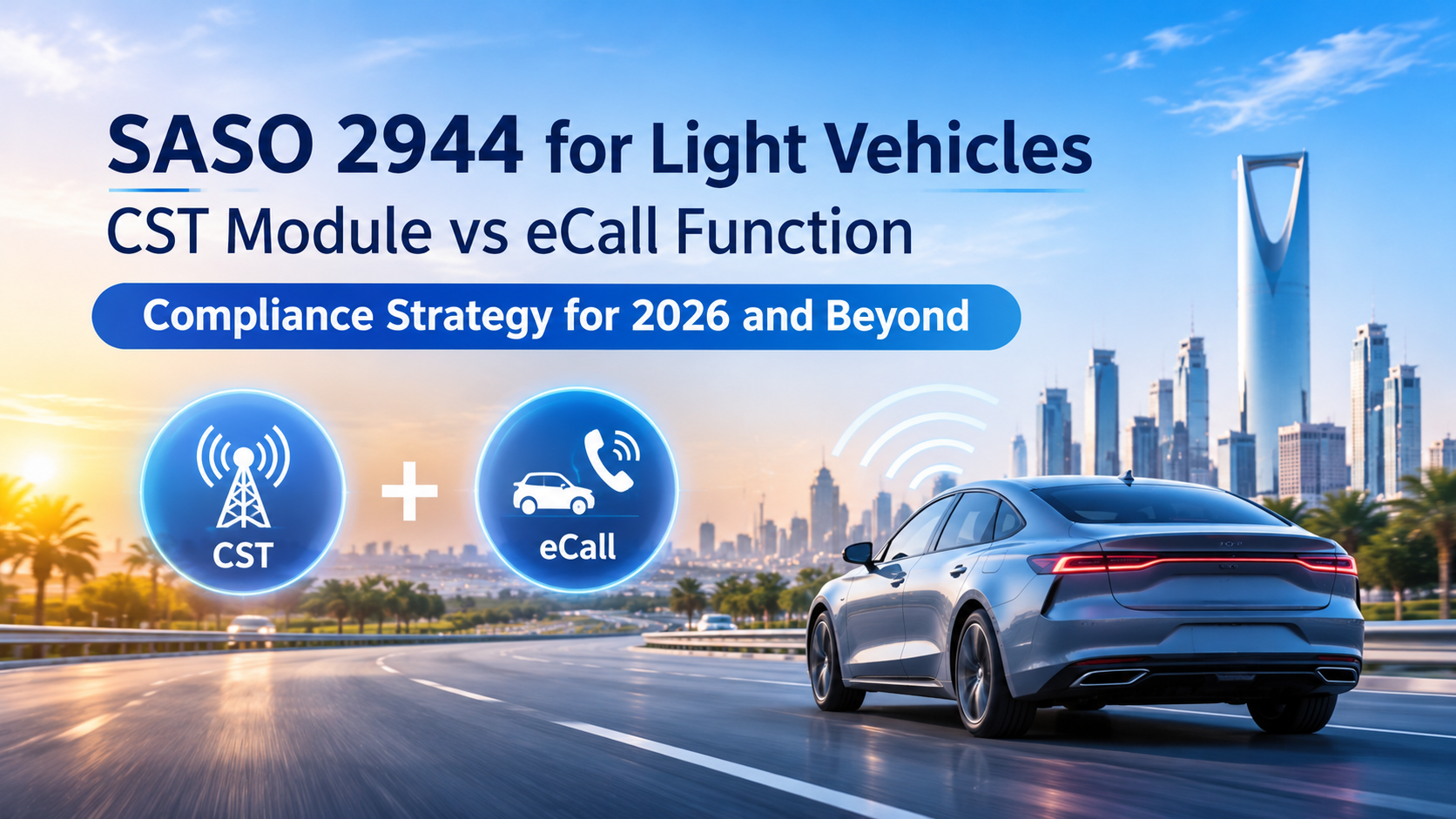 المدونة
Saudi SASO 2944 for Light Vehicles: How to Separate CST Module RF Approval from Vehicle-Leve
اقرأ المقال
 المدونة
Adding 4G/5G eCall to an Existing Vehicle? The Hard Part Is Not the Cellular Module.
اقرأ المقال
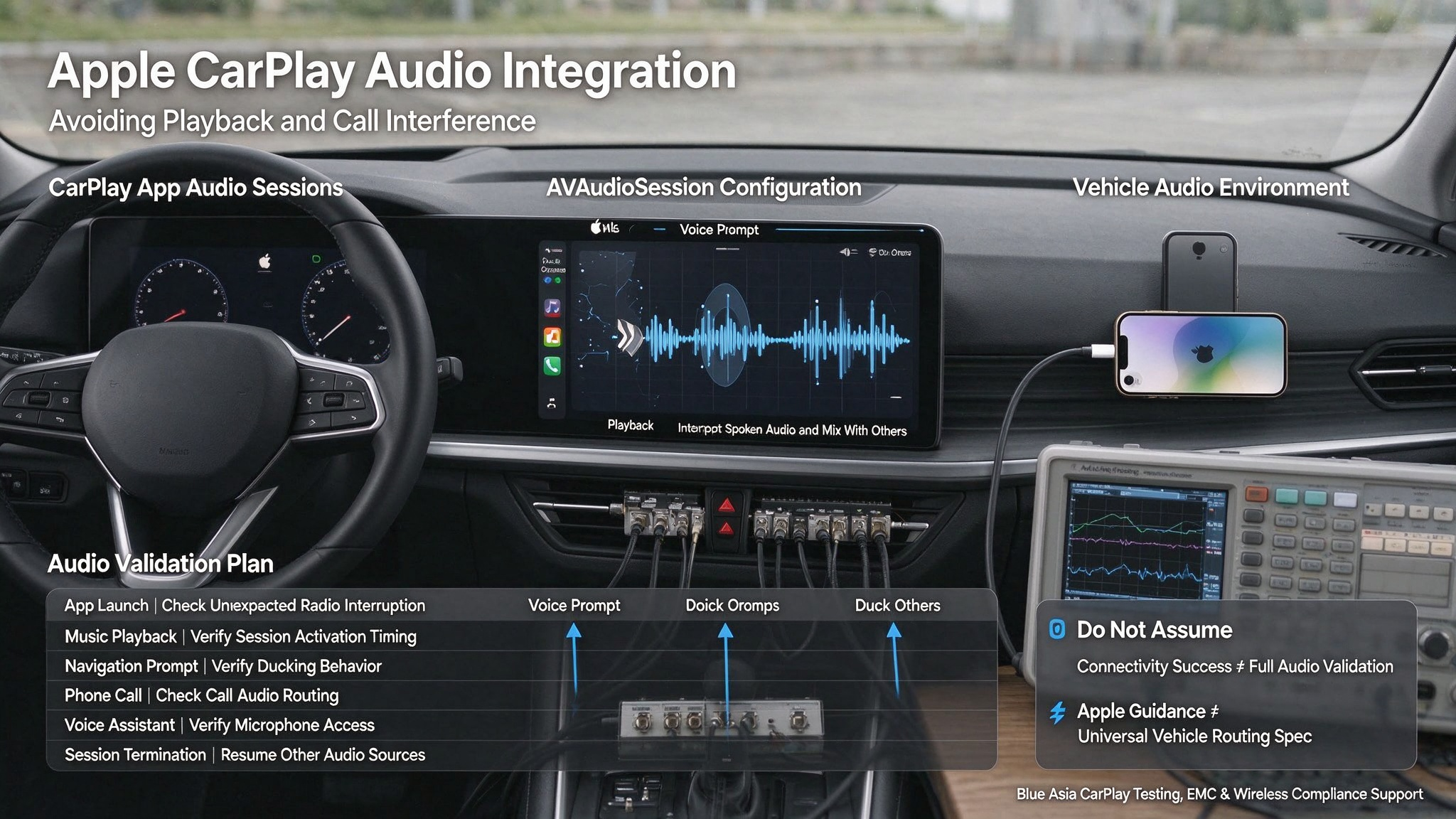 المدونة
Apple CarPlay Audio Integration: How to Avoid Playback and Call Interference
اقرأ المقال
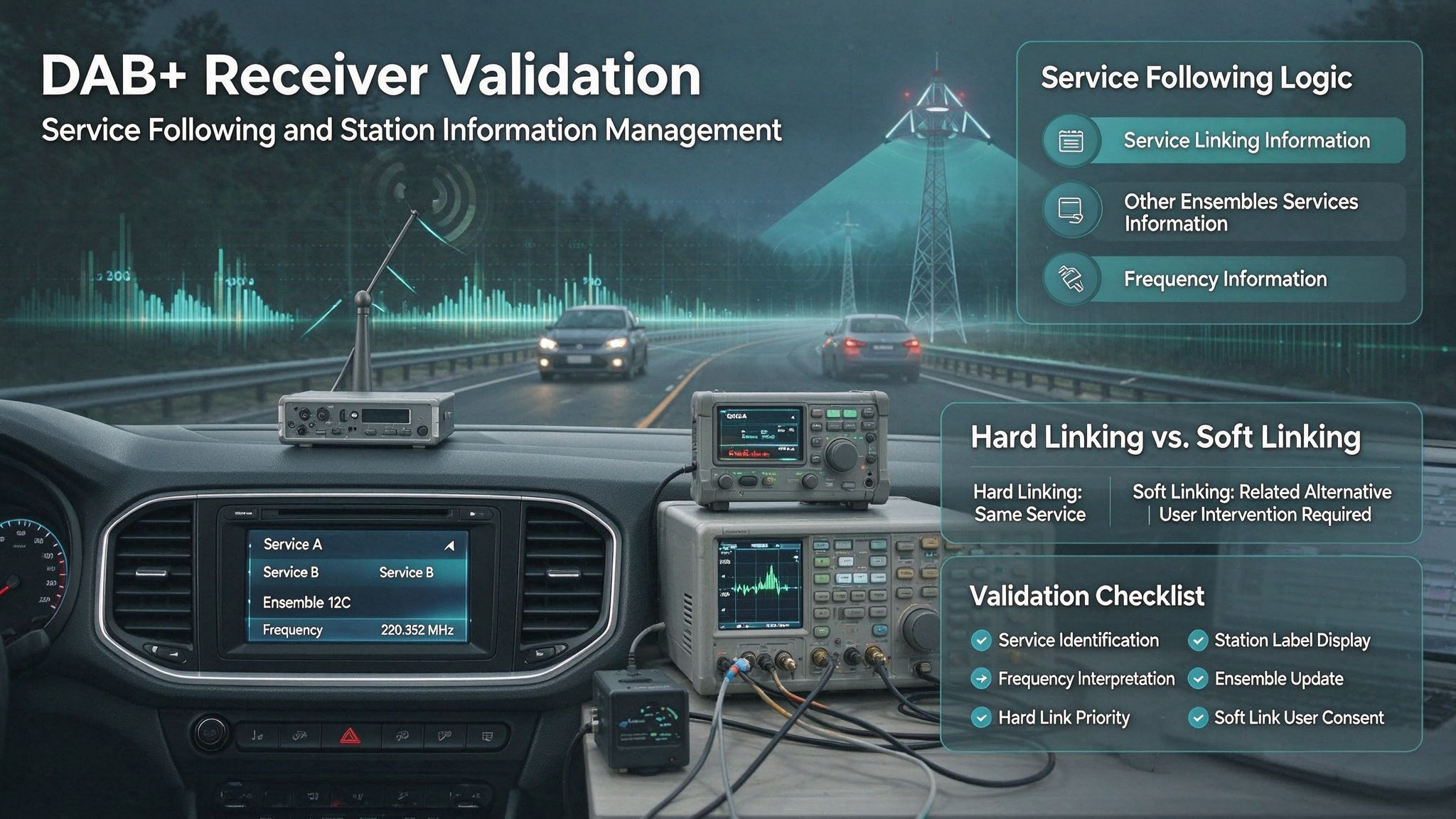 المدونة
DAB+ Receiver Validation: How to Manage Service Following and Station Information
اقرأ المقال

 4000259520