
 English
 Français
 Español
 日本語
 繁体中文
 简体中文

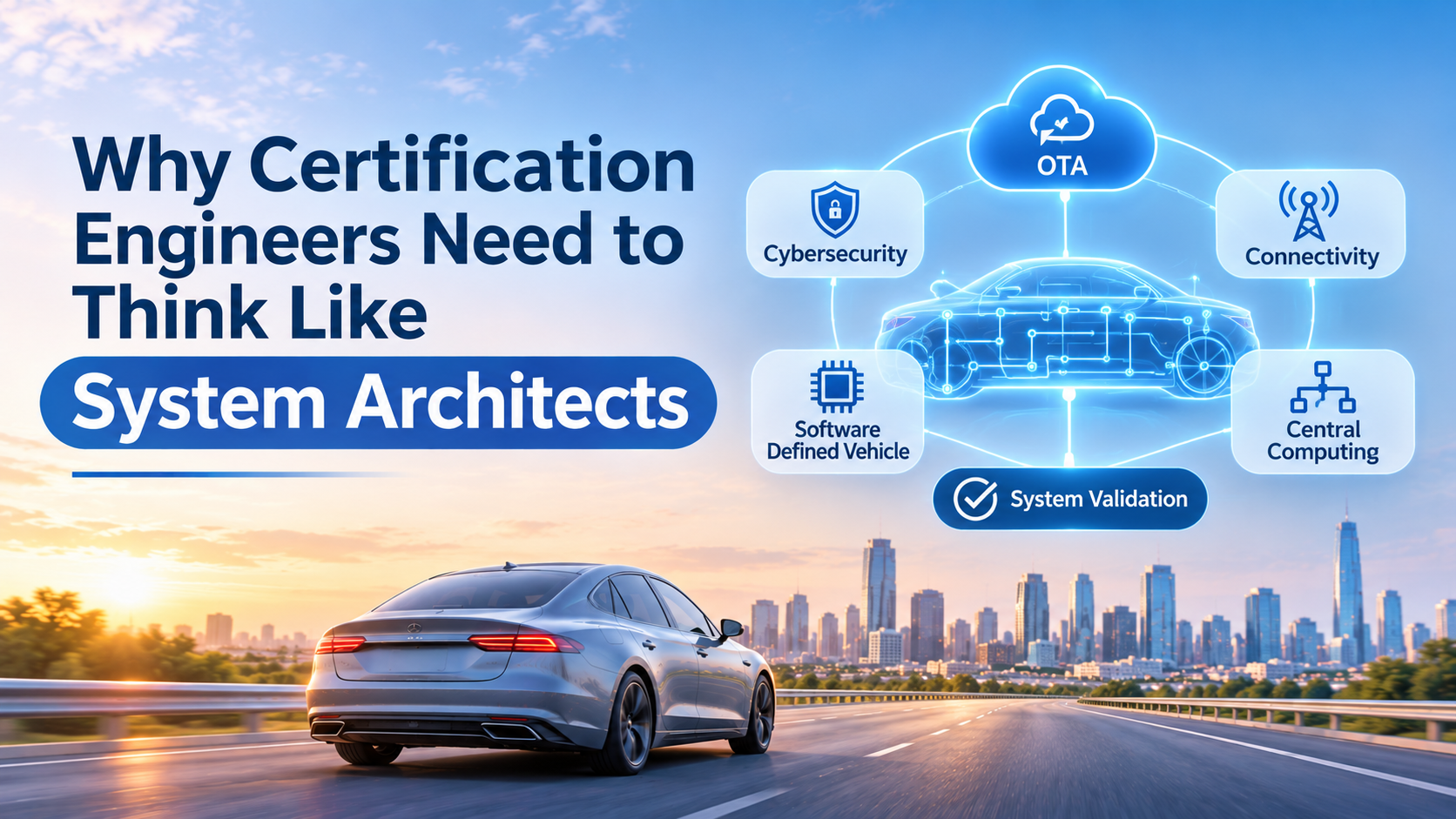
Why Certification Engineers Need to Think Like System Architects
Why Certification Engineers Need to Think Like System Architects
The biggest certification risk isn't RF.
It isn't EMC.
It isn't software.
It's treating them as separate problems.
For years, automotive certification followed a familiar process.
The RF team completed wireless testing.
The EMC team handled electromagnetic compatibility.
The software team developed firmware.
The cybersecurity team prepared documentation.
Finally, the compliance team collected reports before vehicle launch.
This approach worked when vehicles were built from relatively independent electronic control units (ECUs).
But modern vehicles are no longer collections of isolated components.
They are becoming software-defined systems, where every function is connected.
And that changes certification completely.
Today, certification is no longer about proving that individual components comply.
It is about proving that the entire system continues to work safely, securely, and consistently.
The Vehicle Is Becoming One Connected System
The architecture of modern vehicles has changed dramatically.
Instead of dozens of independent ECUs, manufacturers are moving toward:
Central Computing
Domain Controllers
Zonal Architecture
High-speed Ethernet
Service-Oriented Software
Cloud Connectivity
Every subsystem is becoming interconnected.
Changing one software module may influence multiple vehicle functions.
Updating one communication interface may affect several certification areas.
The certification challenge is no longer isolated hardware.
It is system interaction.
One Change Can Trigger Multiple Compliance Reviews
Imagine a simple OTA update.
The software team updates wireless connectivity to improve Android Auto performance.
Sounds straightforward.
But that update may also influence:
RF behavior
EMC characteristics
Cybersecurity controls
Vehicle communication
Software traceability
Regulatory documentation
The update itself isn't the problem.
The interaction between systems is.
Certification engineers increasingly spend their time evaluating these relationships rather than individual components.
RF No Longer Belongs Only to the RF Team
Wireless technologies inside modern vehicles continue to expand.
Today's connected vehicle may simultaneously support:
Bluetooth
Wi-Fi
Cellular
GNSS
UWB
NFC
DAB+
eCall
V2X
Each radio system shares antennas, processors, software resources, and power management.
Improving one wireless function can unintentionally reduce the performance of another.
An RF issue is now often a software issue.
Or a system architecture issue.
The engineering boundaries are disappearing.
Cybersecurity Is No Longer an Independent Project
Regulations such as UN R155 and EN 18031 demonstrate another major shift.
Cybersecurity is no longer evaluated as a standalone document package.
It now affects:
Software design
OTA updates
Communication interfaces
Identity management
Data protection
System architecture
Security decisions made early in development influence certification months later.
Waiting until the end of the project is simply too late.
Software Defines Hardware Behavior
Traditionally, hardware determined system performance.
Today, software increasingly defines how hardware behaves.
Consider a typical infotainment platform.
A software update may modify:
Radio scanning
Bluetooth behavior
Wi-Fi coexistence
Power management
Display logic
Vehicle communication timing
No hardware changes.
Yet multiple certification areas may require review.
This is why software configuration management has become one of the most important compliance activities in modern automotive development.
Validation Is Replacing Individual Testing
Another important industry trend is the move from component validation to system validation.
Passing individual tests does not guarantee that the complete vehicle performs correctly.
For example:
A wireless module passes RF testing.
The infotainment unit passes EMC testing.
Android Auto passes certification.
Cybersecurity documentation is complete.
The vehicle still fails OEM validation.
Why?
Because real vehicles operate as integrated systems.
Only system-level validation reveals how all these technologies interact.
Future certification will increasingly evaluate the behavior of the complete platform—not isolated components.
Certification Is Becoming Systems Engineering
This is perhaps the biggest change happening today.
Certification engineers are no longer simply reviewing reports.
They are becoming system coordinators.
Successful compliance now requires understanding how:
Software versions affect RF behavior.
OTA updates affect cybersecurity.
Connectivity affects EMC.
Vehicle architecture affects validation.
Cloud services affect compliance.
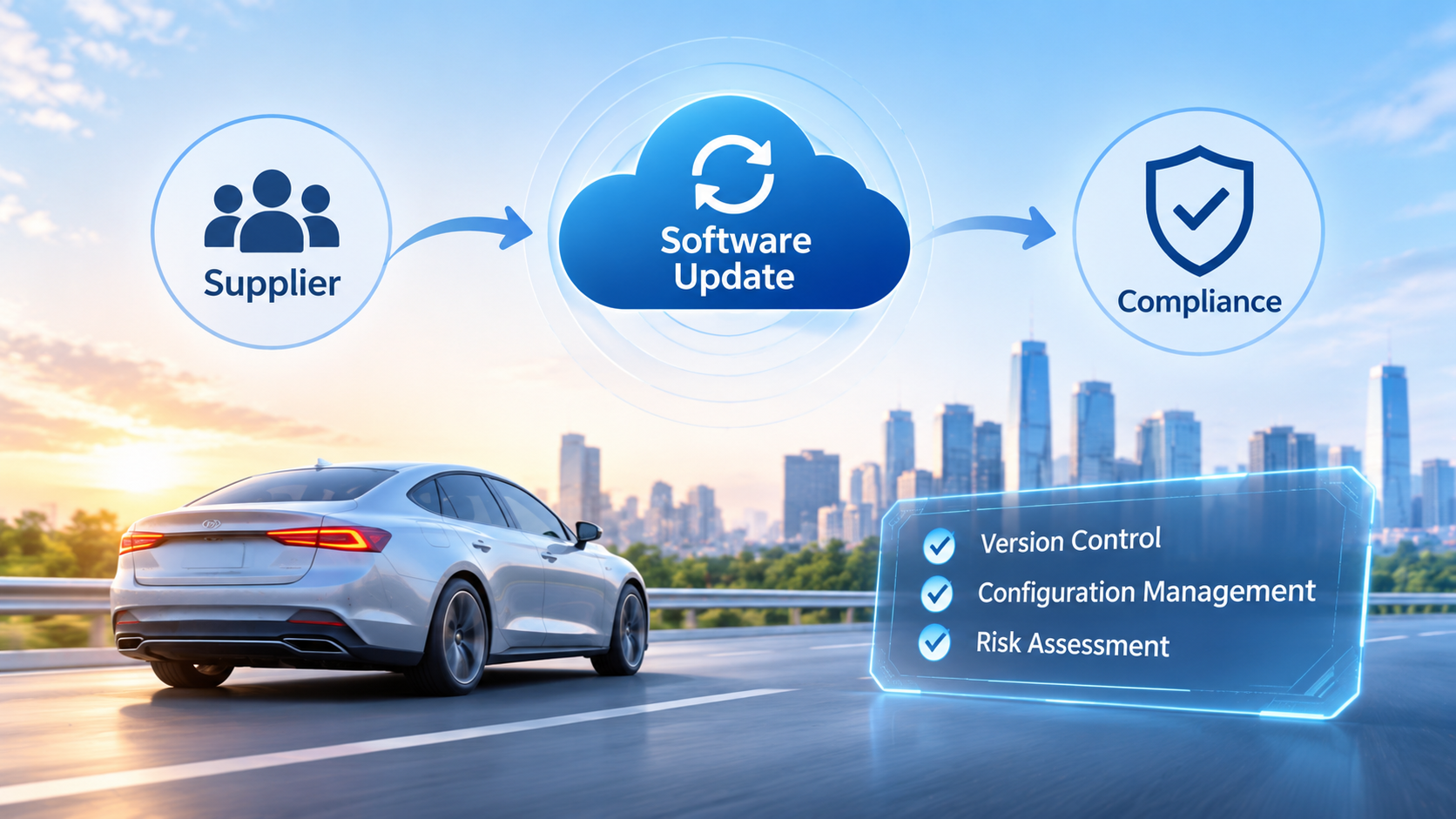
Supplier changes affect traceability.
Certification is evolving into System Engineering.
The companies that recognize this shift early will reduce project risk significantly.
Why Some Projects Reach SOP Smoothly While Others Don't
After supporting many connected vehicle projects, we've noticed a common pattern.
Projects that struggle usually organize compliance by department.
Each team focuses on its own task.
Information is exchanged late.
Problems appear during final integration.
Successful projects work differently.
They treat certification as one continuous engineering process.
RF engineers communicate with software teams.
Cybersecurity experts participate in architecture reviews.
Compliance planning begins before hardware design is finalized.
The result is fewer engineering changes, fewer repeat tests, and a smoother path to SOP.
The Cost of Thinking in Silos
Many companies still believe certification costs come from laboratory testing.
In reality, the biggest costs often come from poor coordination.
Late system integration issues may lead to:
Additional validation
Repeat RF testing
Software redevelopment
OTA regression testing
Vehicle requalification
Delayed SOP
For global vehicle programs, these delays can easily add tens of thousands—or even hundreds of thousands of U.S. dollars in engineering and launch costs.
The problem isn't certification.
The problem is discovering system interactions too late.
Final Thoughts
The automotive industry is entering the era of the Software Defined Vehicle (SDV).
As Central Computing, Domain Controllers, OTA, Cybersecurity, Connected Vehicle technologies, and intelligent software continue to merge, certification can no longer be managed as separate technical disciplines.
Future compliance belongs to companies that understand systems—not just standards.
Certification engineers who think like System Architects will become one of the most valuable roles in automotive development.
At BlueAsia, we help OEMs and Tier 1 suppliers build integrated compliance strategies covering RF, EMC, CE RED, UN R155, UN R156, EN 18031, Android Auto, CarPlay, DAB+, eCall, SASO 2938, and global automotive certification—helping teams identify system risks long before they delay SOP.
The future of certification is no longer component testing.
It is System Engineering.
 المدونة
Why Software Updates Are Creating Supplier Management Challenges
اقرأ المقال
 المدونة
Why Certification Engineers Need to Think Like System Architects
اقرأ المقال
 المدونة
C-V2X RSU & OBU Certification: How to Plan OmniAir, FCC and CE in Parallel
اقرأ المقال
 المدونة
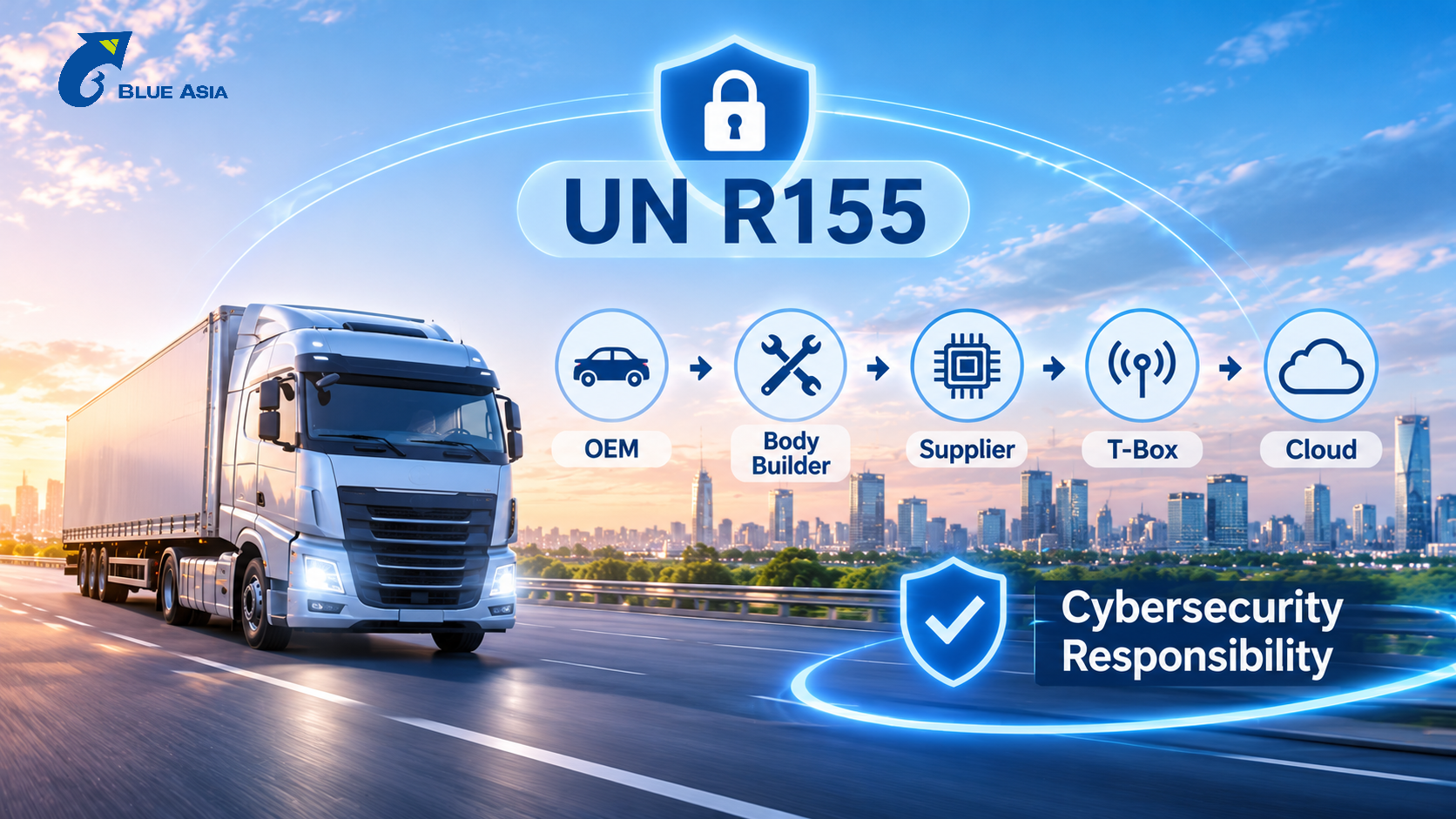
Your Base Vehicle Is Already R155 Approved. What Happens When a Body Builder Adds New Electr
اقرأ المقال
 المدونة
Planning Wireless Certification Before Product Design Freeze
اقرأ المقال
 المدونة
Understanding the MFi Program in a CarPlay Product Development Plan
اقرأ المقال

 4000259520