
 English
 Français
 Español
 日本語
 繁体中文
 简体中文

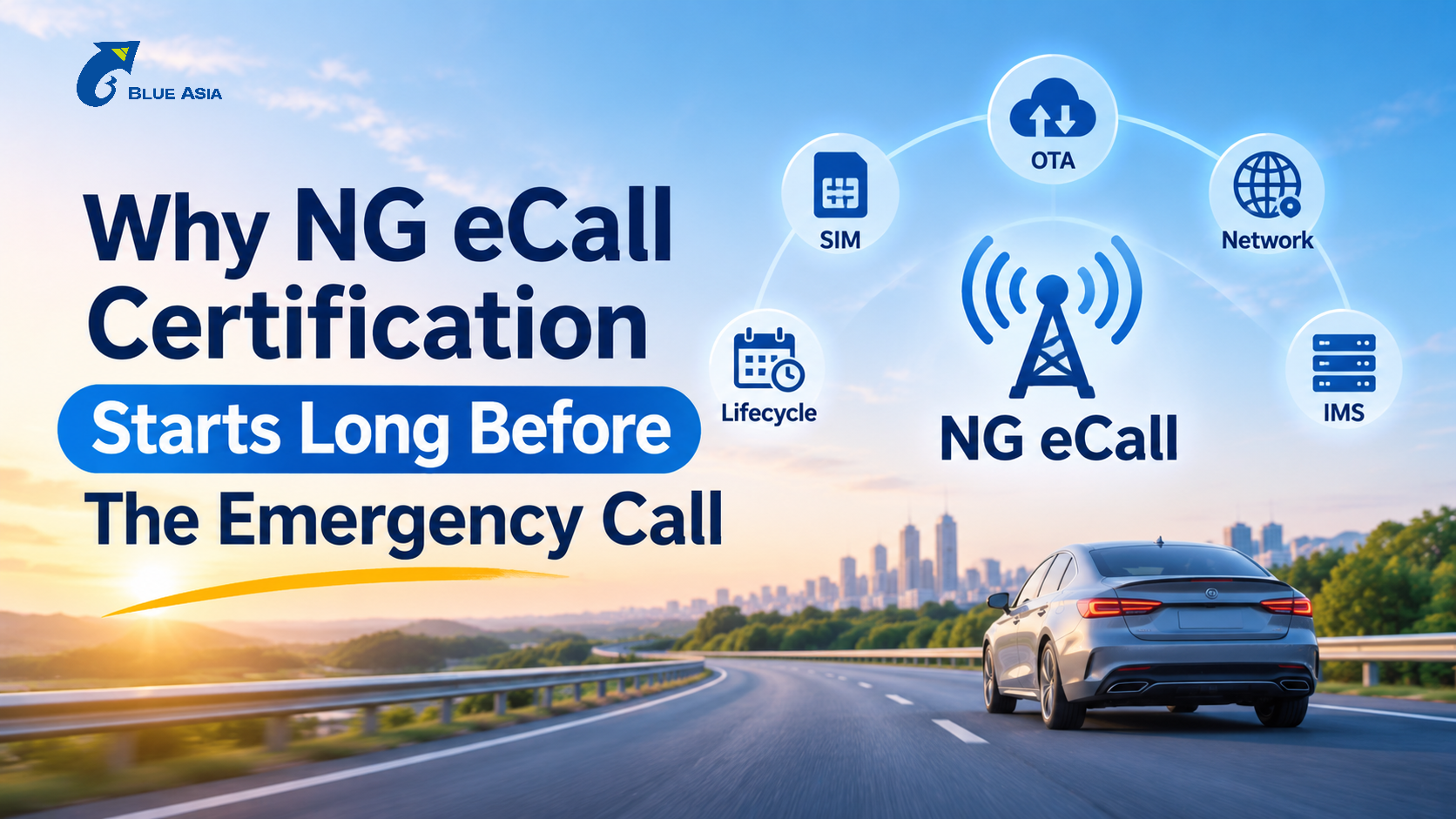
Why NG eCall Certification Starts Long Before the Emergency Call
Why NG eCall Certification Starts Long Before the Emergency Call
Most engineers think the biggest challenge in NG eCall is making the emergency call.
It isn't.
The real challenge begins months before anyone presses the SOS button.
Across Europe, mobile operators are shutting down 2G and 3G networks while accelerating the deployment of 4G and 5G. This transition is driving one of the biggest changes in automotive connectivity: the migration from traditional eCall to Next Generation eCall (NG eCall).
Many manufacturers still approach NG eCall as another certification project.
Replace the communication module.
Update the software.
Run the tests.
Pass certification.
But successful OEMs know that's not how NG eCall works.
The projects that stay on schedule don't start with the emergency call.
They start with network planning, communication architecture, lifecycle management, and long-term software strategy.
NG eCall Is a Connected Vehicle System
Traditional eCall focused primarily on establishing an emergency voice call and transmitting the Minimum Set of Data (MSD).
NG eCall goes much further.
It relies on:
IMS (IP Multimedia Subsystem)
Packet-switched communication
LTE and future 5G networks
Software-controlled communication
Continuous network availability
This means NG eCall is no longer just an emergency feature.
It has become part of the vehicle's connected ecosystem.
That changes how certification should be planned.
Why Certification Starts with the Network
Many project teams focus first on vehicle hardware.
However, NG eCall performance depends heavily on the communication network.
Questions that should be answered early include:
Which operators will support the service?
How will roaming be managed?
What happens when coverage changes?
How will network fallback work?
How will future carrier changes affect the vehicle?
These questions have little to do with pressing the SOS button.
But they determine whether the emergency call can actually be completed.
IMS Is More Than a Technical Requirement
One of the biggest changes in NG eCall is the adoption of IMS (IP Multimedia Subsystem).
Many engineers view IMS as another protocol.
In reality, it becomes the communication foundation.
IMS manages:
Session establishment
Voice services
Emergency routing
Authentication
Network interaction
Service continuity
Without stable IMS integration, emergency communication reliability can be affected even if every hardware component performs correctly.
Successful certification therefore begins with software architecture—not laboratory testing.
SIM Management Is Becoming a Long-Term Compliance Issue
In traditional projects, the SIM card was often treated as a procurement item.
In NG eCall, it becomes part of the system architecture.
Manufacturers should consider:
Carrier compatibility
Roaming agreements
Network evolution
SIM lifecycle
Remote profile management
Long-term availability
A vehicle may remain in service for more than ten years.
The communication strategy must support that entire lifecycle.
Certification cannot ignore future network changes.
OTA Can Change Compliance After SOP
One of the biggest differences between traditional eCall and NG eCall is software evolution.
Modern connected vehicles receive:
OTA software updates
Security patches
Communication stack updates
Network configuration updates
Every update has the potential to influence emergency communication.
This creates a new engineering challenge.
Certification is no longer a one-time milestone.
Manufacturers must evaluate how software changes affect compliance throughout the vehicle's lifetime.
Lifecycle Management Is the Missing Piece
Many discussions about NG eCall focus on certification testing.
Far fewer discuss lifecycle management.
Yet this is where many future challenges originate.
Consider a typical vehicle program.
Year 1:
Certification completed.
Year 3:
New carrier configuration.
Year 5:
OTA communication update.
Year 7:
Network infrastructure changes.
Year 10:
Legacy technology retirement.
Will the emergency system still operate as originally certified?
This question is becoming increasingly important for OEMs.
The future of NG eCall depends not only on passing today's tests but on maintaining reliable performance over many years.
Why Some NG eCall Projects Fall Behind Schedule
Projects rarely fail because engineers don't understand emergency calling.
More often, they underestimate system complexity.
Late discovery of issues involving:
IMS integration
Network compatibility
Carrier requirements
Software architecture
OTA planning
Lifecycle support
can delay validation, increase engineering effort, and affect SOP.
The emergency call itself may only last a few seconds.
Preparing the vehicle to support it reliably takes months.
The Cost of Starting Too Late
Waiting until formal certification to evaluate NG eCall can be expensive.
Late design changes may require:
Software redevelopment
Network revalidation
Additional interoperability testing
OTA regression testing
Vehicle integration work
Project schedule adjustments
For global vehicle programs, these activities can easily add tens of thousands—or even hundreds of thousands of U.S. dollars in engineering costs, often far exceeding the original certification budget.
The earlier the communication architecture is validated, the lower the overall project risk.
How Leading OEMs Approach NG eCall
Instead of viewing NG eCall as a regulatory requirement, leading manufacturers treat it as part of the vehicle platform strategy.
Best practices include:
✔ Plan IMS architecture during system design.
✔ Validate carrier compatibility early.
✔ Consider roaming and future network evolution.
✔ Include OTA impact assessments in the compliance process.
✔ Establish software version control and lifecycle management before SOP.
✔ Coordinate connectivity, software, and certification teams from the beginning.
This integrated approach improves both compliance and long-term product reliability.
Final Thoughts
NG eCall is not simply replacing 2G with 4G.
It represents a fundamental shift toward software-driven, IP-based vehicle communication.
The biggest challenge isn't making the emergency call.
It's building a communication platform that continues to work throughout the vehicle's entire lifecycle.
As Europe accelerates the transition from legacy cellular networks to 4G and 5G, manufacturers that plan network architecture, IMS integration, OTA strategy, and lifecycle management early will significantly reduce certification risk and avoid costly redesigns.
At BlueAsia, we support OEMs and Tier 1 suppliers with NG eCall, IMS validation, vehicle communication testing, RF and EMC testing, OTA-related compliance, and global automotive certification—helping engineering teams identify risks long before they impact SOP.
Because in the era of connected vehicles, the emergency call is only the final step. The real certification journey starts much earlier.
 المدونة
Bluetooth LE Audio & Auracast: What Manufacturers Need to Know
اقرأ المقال
 المدونة
Wi-Fi 7 Testing: What IoT Manufacturers Need to Know
اقرأ المقال
 المدونة
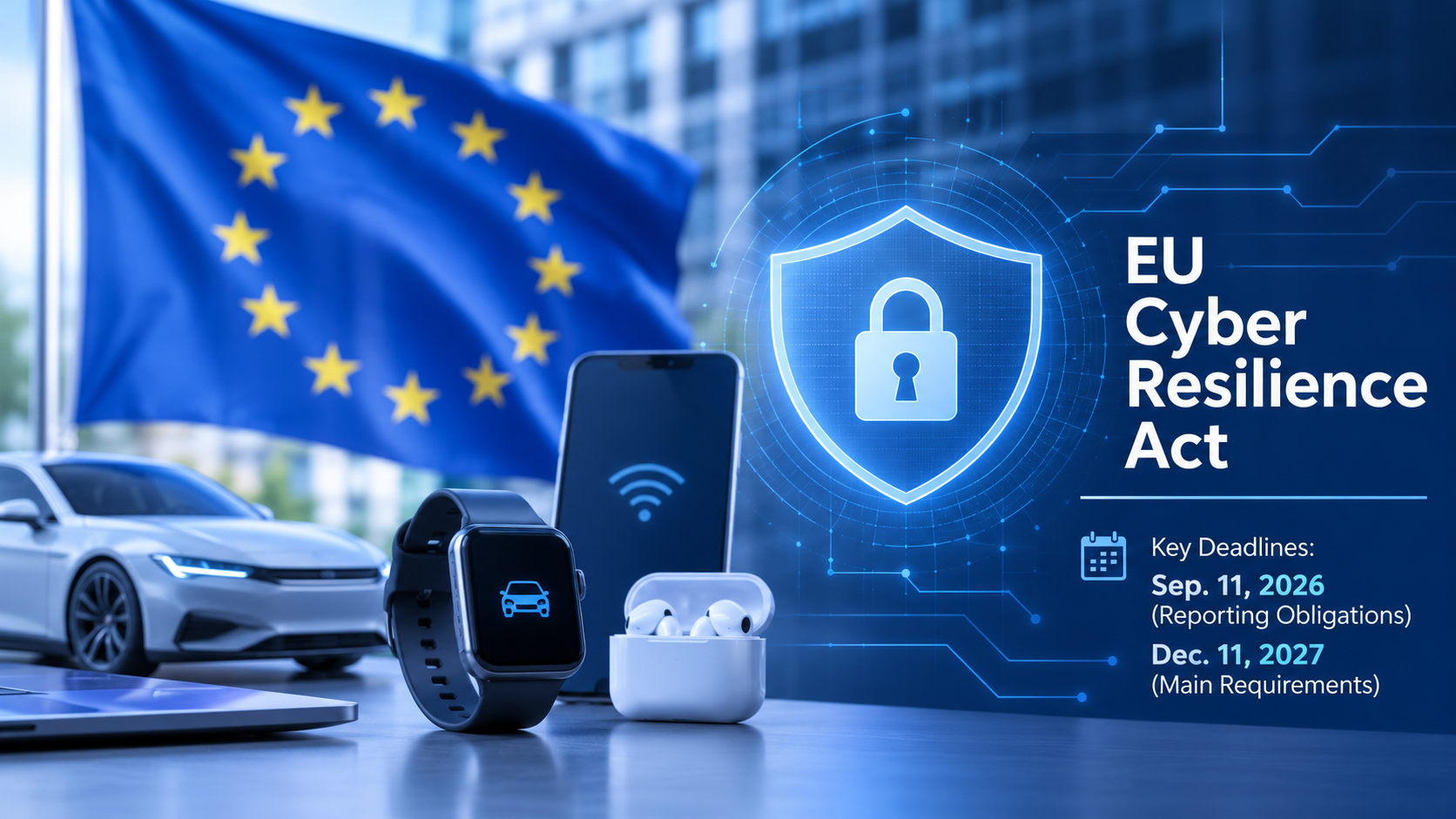
EU Cyber Resilience Act (CRA): What Manufacturers Need to Know Before 2027
اقرأ المقال
 المدونة
Why Vehicle Data Is Becoming A Compliance Topic
اقرأ المقال
 المدونة
Why NG eCall Certification Starts Long Before the Emergency Call
اقرأ المقال
 المدونة
How Should Smart Cockpits in APEC Official Vehicles Be Validated?
اقرأ المقال

 4000259520